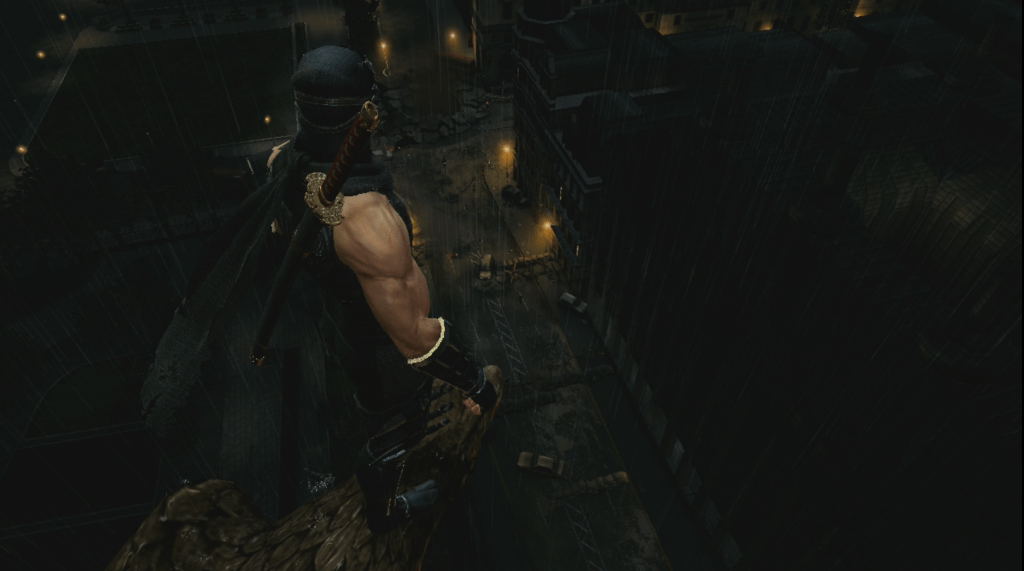
Ninja Gaiden 3 opens with a series of QTEs that feel like a statement of intent. Bombastic and simplified, this is a triple-A game of its era, willing to sacrifice its identity in an attempt to find a mainstream audience. In hindsight we know this gamble didn’t pay off, with a revised version of the game released within a year to a skeptical fanbase. The Razor’s Edge version of Ninja Gaiden 3 essentially renders the original obsolete, but after playing through it over the weekend I found it to be a not-entirely-unenjoyable cautionary tale.
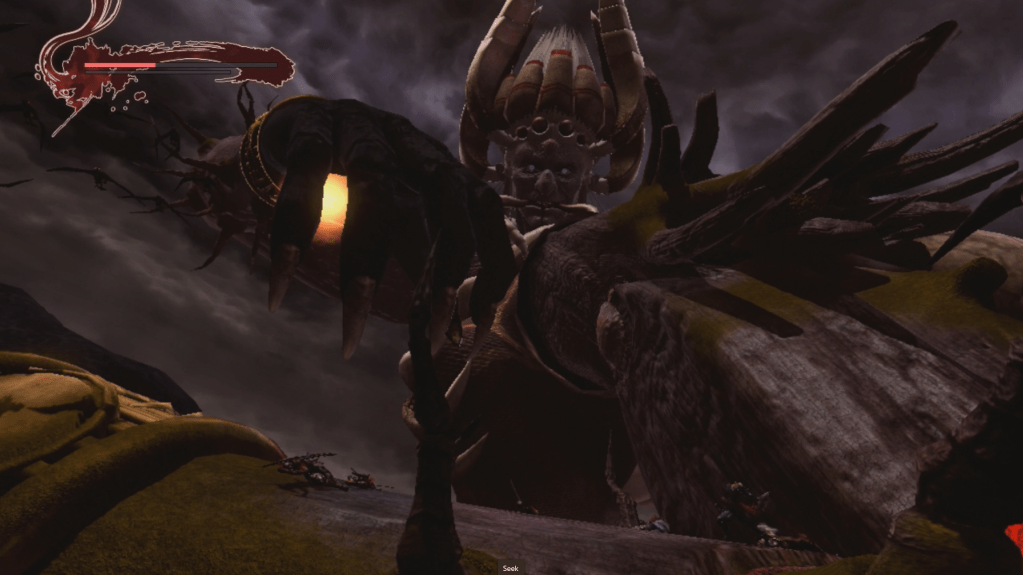
In Team Ninja’s attempt to create a triple-A blockbuster, they trimmed the series’ fat a bit too close to the bone. Gone are scarabs, items, and anything worth leaving the beaten path for. And really, the game is so linear you seldom even have the opportunity to move even seconds away from the primary route. Due to the punishing nature of the first two games in the Ninja Gaiden reboot series, I would find myself searching the environments for anything that could reduce my combat disadvantage. In Ninja Gaiden 3 that opportunity doesn’t exist, nor is it really necessary.
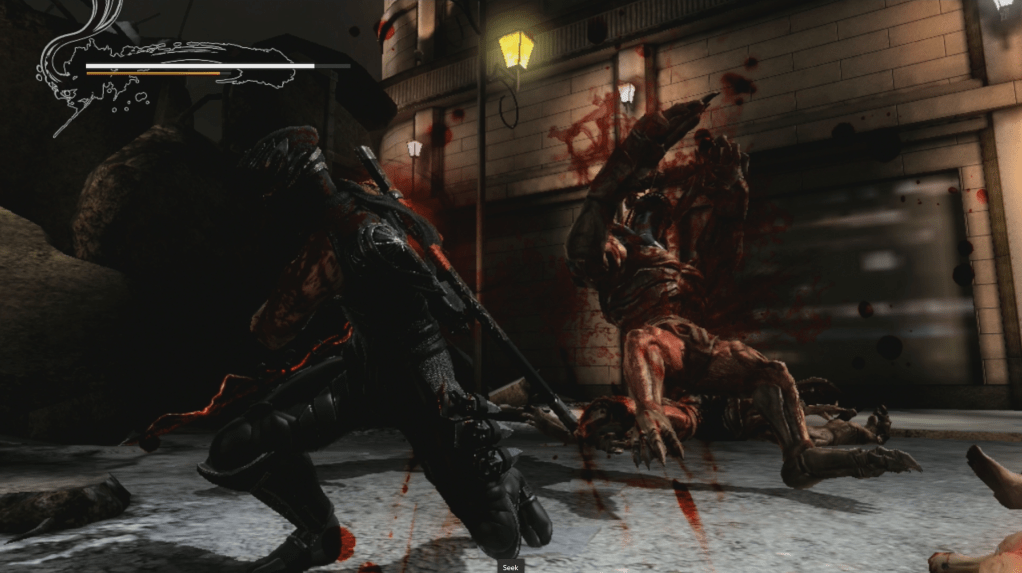
NG3 is the easiest of the Ninja Gaiden series, by a wide margin. As someone who didn’t have the reflexes for these games 20 years ago, and even less so now, I was able to cruise through the game on normal mode, with only a handful of combat encounters giving me a hard time. This honestly isn’t a negative to me (there are two higher difficulties for those who want it). The real issue is how simple the combat is in this entry.
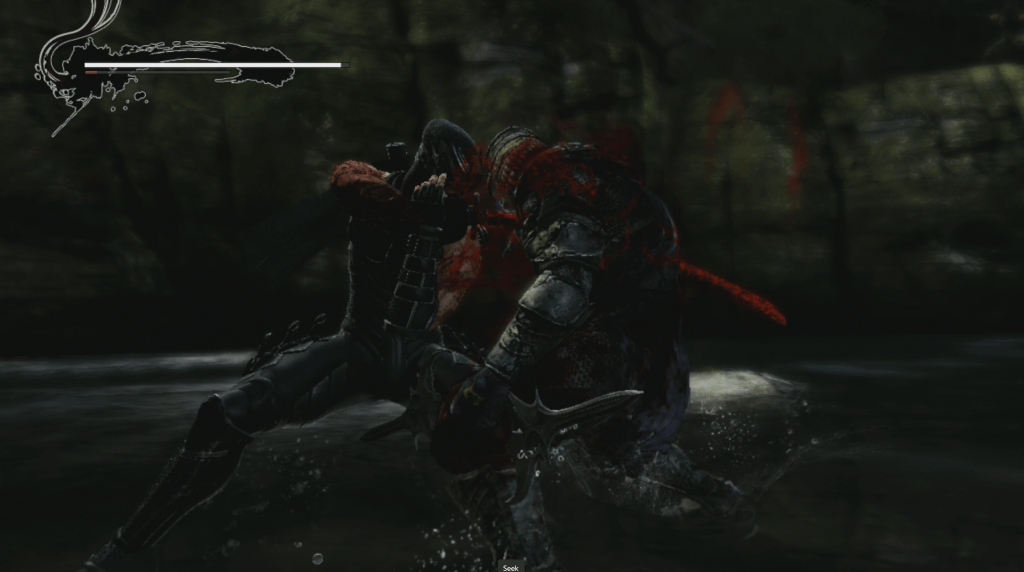
Outside of a handful of enemy types and bosses, there is really no strategy to combat in NG3. You are best served by mashing the dash and attack buttons until one of your specials fills up and then letting it rip. One special is an auto-dart around and slice dudes and the other is a screen clearing (and health refilling) magic attack. That’s it, these are the only two special attacks you have for the entire game.
The lack of variety in specials isn’t great, but far more egregious is being limited to a single melee weapon throughout the entire game. While the previous modern Ninja Gaiden games allow protagonist Ryu to wield everything from claws to staffs, in NG3, it’s simply sword.
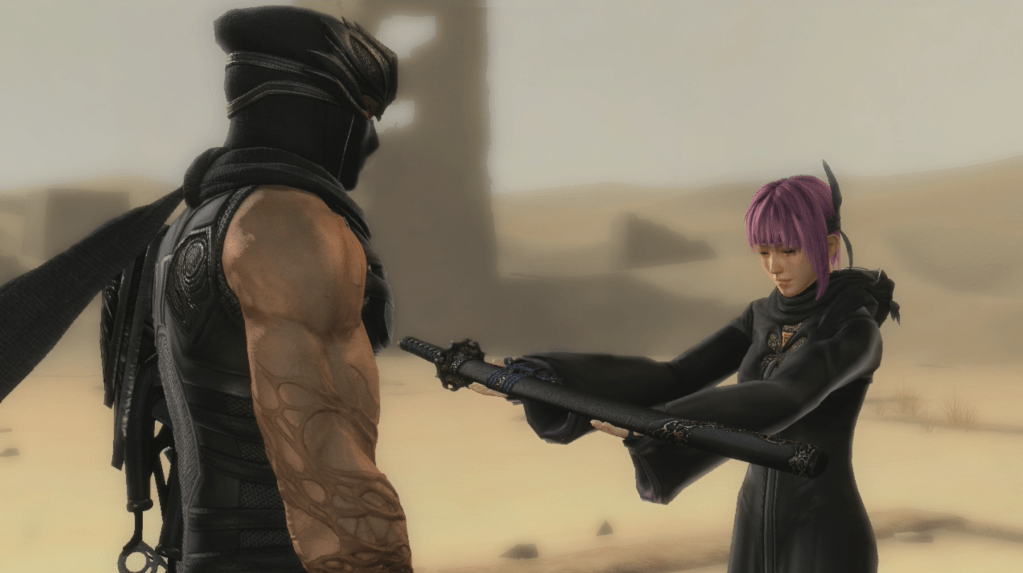
I’m not really sure why the developers opted to go this route. In the previous games, weapon choice was often a strategic decision. Maybe this was an intentional part of the streamlining process, or maybe, because the sword plays an important role in the story, the choice was made for narrative continuity. If the latter was the case, it wasn’t worth it.
Written by Masato Kato (the NES Ninja Gaiden games, Chrono Trigger / Cross, Xenogears), the story in NG 3 attempts to inject some deeper themes into the series, to varying degrees of success. A major component of the story is the curse placed on Ryu which thrives on the lives he’s taken. This is the era of “ludonarrative dissonance” and games trying to reconcile their stories with their protagonist’s body count (which rarely worked). In NG3 the physical representations of this are Ryu’s deformed arm and the Dragon Sword, which may explain why Ryu’s melee tools are so limited. It’s a clumsy story with a plot that somehow manages to feel more ridiculous than the supernatural elements, so it’s hardly worth the limited melee options.
Despite fumbling themes and plot, the story isn’t a total wash. The moments when Ryu manages to awkwardly sorta connect with other humans are often corny, but endearing. These moments feel insane in the greater context of the story, which makes me like them more. Kato doesn’t take any narrative swings on the level of Chrono Cross or Xenogears here, but I appreciate he tried to say something sincere, even if it mostly missed.
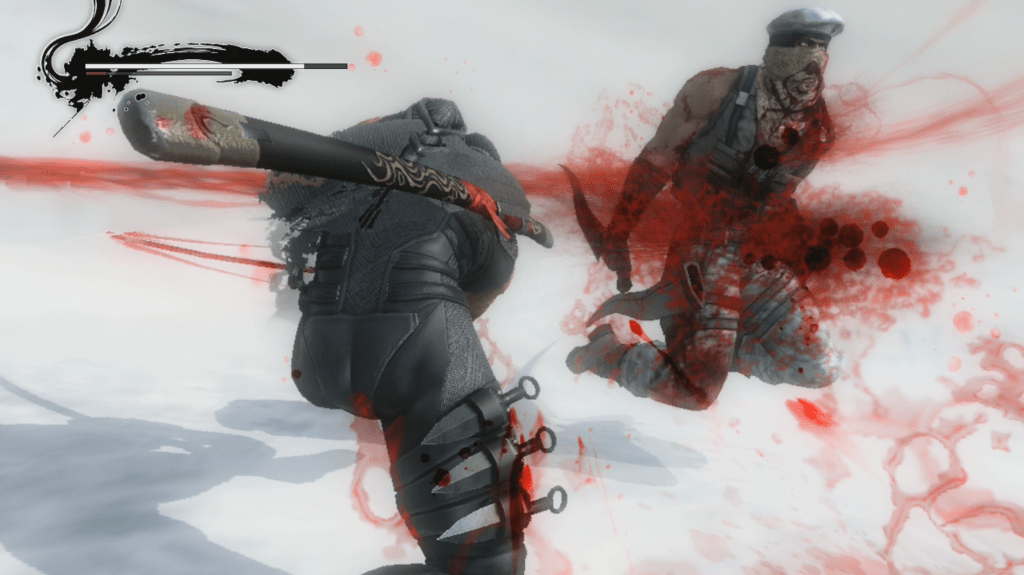
Ninja Gaiden 3 is one of the most fascinating disappointments of the era. With its linearity, overly simplified mechanics, online multiplayer (sadly defunct), cinematic presentation, optional motion controls (they suck), QTEs, and clunky attempt at a “serious” story, the game is quintessentially 2012. Within a year the game would be re-released in a form more palatable to long-time fans as a pricey apology. Despite everything, the game isn’t necessarily unfun. There is somewhat of a rhythmic joy to the combat, similar to that of musous and arcade brawlers. I cannot in good conscious recommend the original version of NG3, but for the series and the industry in general, it’s a compelling time capsule of a game made simultaneously for everybody but also no one.
Played and captured on a PlayStation Triple

Leave a comment